2025/12/28
Did you ever consider buying a car that was affordable and in great condition, but in no way a a viable purchase for all the feces piled in its back, driver's and front passenger's seats? Perhaps you considered adopting a beautiful and affectionate pet whose strange malady compelled it to defecate constantly and everywhere. Otherwise, you might've found a cheap, splendid set of volumes or boxed set of DVDs that you've always wanted at some consignment shop or other, but alas: it's saturated with shit. All of these movies are comparable: quality productions that are too deeply defective to be deemed good. See, if you bought used panties online from Japa--
=]=:< <"We get it. Move on."
Okey-doke.
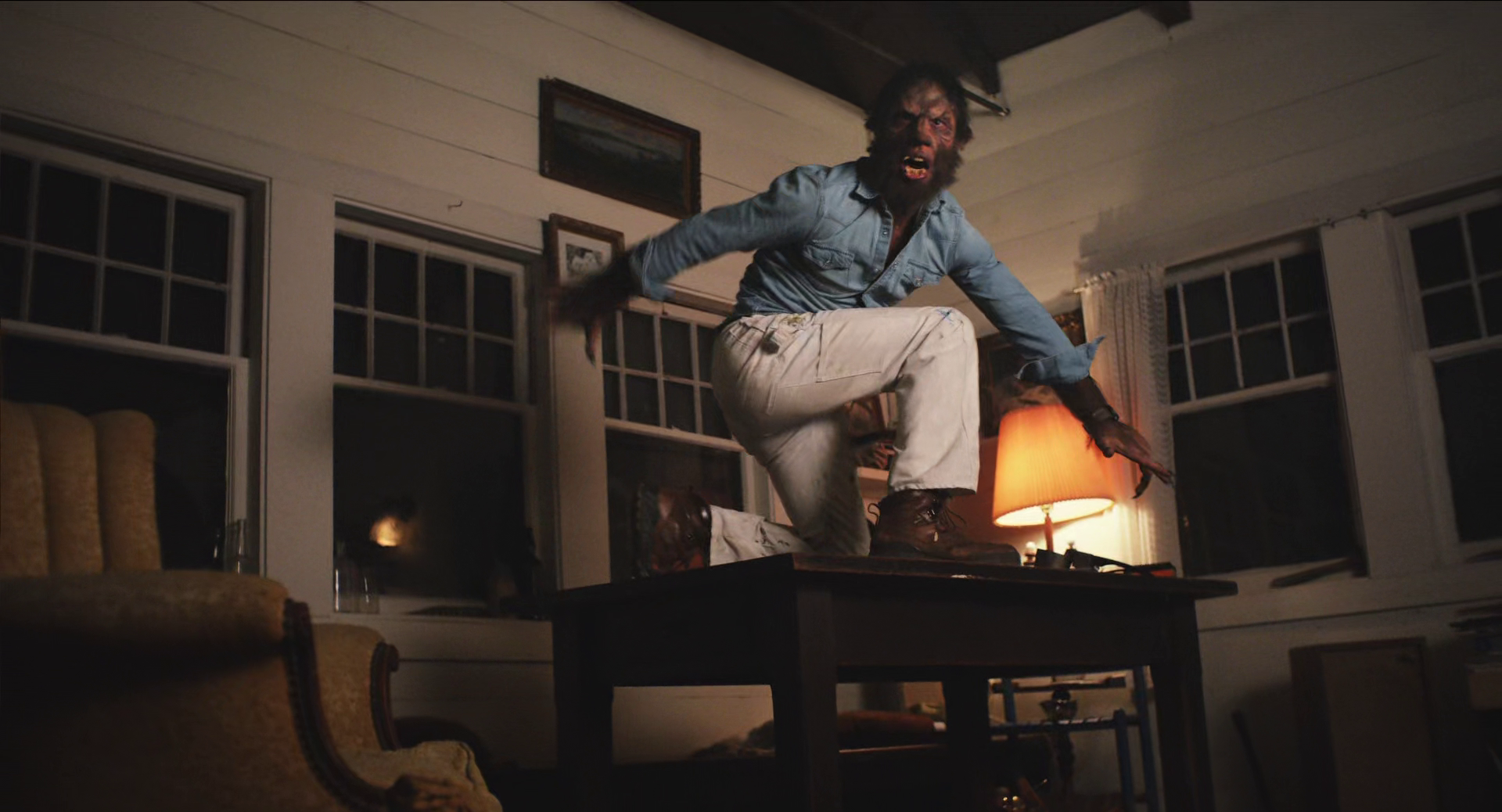
His increasingly macabre images indicate that an alcoholic painter (Alex Hurt) is the one who's slaying men, women, and children during every full moon that transforms him into a ravenous, bipedal wolf. The sole witness to such slaughter is his co-worker, a migrational community's honcho (Rigo Garay) who's blamed for the murders by the corrupt development contractor (Marshall Bell) with whom the craftsman's deceased father was associated. Larry Fessenden's contemporization of The Wolf Man finds the veteran filmmaker in technically terrific form, shooting as smartly as ever, fostering good performances from a solid, partially familiar cast, and presenting quality production values on his typical shoestring budget. Alas, the implausibly philosophical and sentimental loquacity of his characters becomes very tiresome, emphasizing a dearth of effective grue, and prompting the question of whether the New Yorker is more interested in horror or social drama. His condemnatory focus on aging Boomers who exploit, then victimize migratory labor is admirable, but as blithely as the average politician, he also neglects the predicament of America's native, blue-collar workers, whose livelihoods are threatened by both. They're instead stupidly, callously caricatured as two dumb, agitating rednecks (Cody Kostro, Marc Senter) who've all the representative sophistication of supporting characters from a hicksploitational pic. Meanwhile, many of his most interesting characters and actors -- an attorney (Barbara Crampton) who succors the cursed artist, the frustrated boyfriend (Joe Swanberg) of his morose ex (Addison Timlin), one local vigilante (James LeGros) and his doomed buddy (Kevin Corrigan) -- come and go far too quickly. Timlin herself plays the wounded love interest with charming restraint, but she hasn't any chemistry with Hurt. A local pastor personated by John Speredakos is imbued by the Glass Eye regular with a likable compassion, but his confrontation with LeGros's gunsel and a small mob of concerned citizens that's mediated by the local sheriff (Joseph Castillo-Midyett) is achingly corny for his wearisomely pious homilies. Hurt carries the picture well in a role informed largely by his own strained relationship with and the recent death of his late, famous father William, and what would from lesser mouths seem trite is spoken by him with a laudably passionate conviction, especially in conversation with Speredakos's ecclesiastic and a wary friend (Motell Gyn Foster). This is so nearly a very good movie that one can taste it, but it's sunk by excess chatter and insufficient action that's repeatedly truncated almost as soon as it starts; Fessenden stages and edits the latter spectacularly, and Jared Balog's, Pete Gerner's, and Brian Spears's quasi-lycanthropic makeup is among the best seen in a feature since 1981. On the other hand, he doesn't at all curtail the speculative musings of a deputy (Ella Rae Peck) who exists exclusively in his head. A horror film can contain a social message, and certainly bear the diegetic weight of intrigues concerning unscrupulous dealings in realty and labor disputes, but it cannot sustain this ratio of voluble, schmaltzy drama to morbidity, especially as a vehicle for the convictions of an aging leftist who can no longer perceive his own biases and ensuant hypocrisies. Between end credits, a short shot references Fessenden's previous Depraved -- a flawed yet well-crafted variation of Frankenstein that hadn't any of this movie's shortcomings. Hopefully, he'll rework another Universal Monster with his usual craft, and leave the politicized platitudes and improbable hokum to pundits, politicos, and other scamsters.
=]=:< <"I wish the worst we could say about female cops is that they're competent but won't shut up. I guess Fessenden never happened upon one in the wild."
I honestly love Larry as an actor and filmmaker, but as a person (and increasingly, a screenwriter), he's a Boomerish, leftarded early Xer who pathologically characterizes everyone who isn't a white, straight, gentile male as blameless, reverend creatures incapable of moral error. Mentally, Xers like this are as permanently lodged in the mid-'90s as Boomers are in the '70s and early '80s.
=]=:< <"Yeah, he's really given to that '90s schmaltz these days. 'It's a tough country, but we all love it.'"
Gay.
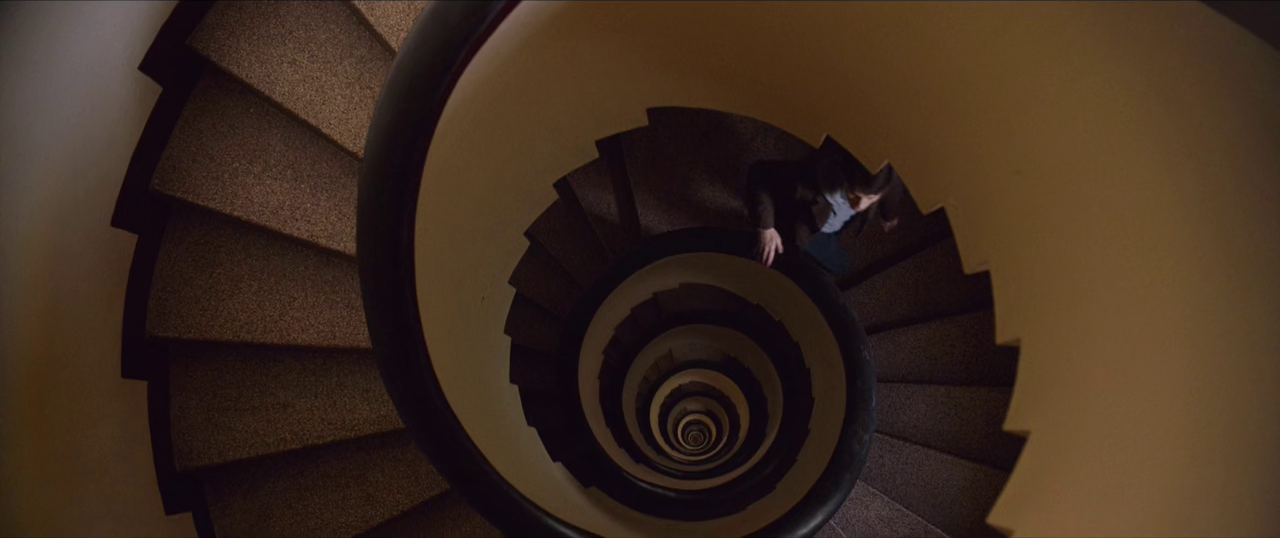
Like a young, lusty Latina between boyfriends, François Ozon immediately resorts to sex in moments of doubt or uncertainty, which is one reason why he dragged Joyce Carol Oates's novel Lives of the Twins to the screen not as the intriguing erotic mystery that it might've been, but as an overindulgently oversexed psycho-thriller that degenerates into tawdry, cliched horror ere an underwhelming denouement. Years of anxiety and abdominal pain lead a young woman (Marine Vacth) to a psychotherapist (Jérémie Renier), whose passive, attentive treatment resolves her problems before they fall in love and cohabitate. When she sees him where he couldn't be, she sets out to confront another therapist (also Renier) who may be his doppelganger. Nearly gaunt and styled boyishly (so that Ozon could fetishize both of his leads), Vacth fares well in the nervy lead despite a few overplayed moments, but Renier is the real star in challenging, antipodal roles enacted with alternating gentle reservation and domineering vitality. Several classic actors (Charlotte Rampling, Marie Rivière, et al.) appear in frustratingly brief roles of Ozon's pictures; Jacqueline Bisset makes the most of her small, maternal part. As usual, his direction is painstakingly fine, and his screenplay absurdly degenerate: scant sexual tension is generated because scarcely a lubricious moment is implied; newlyweds indulge in pegging; carefully set shots conduce visual conceits both inspired and stupid. Ever beholden to his worst habits, tackiness, and pornographic sensibilities, Ozon is a exemplar of genuine talent wanting of focus, taste, and discipline.
=]=:< <"Does Ozon imagine himself as the guy fucking the boyish girl, or the boyish girl being fucked by the guy, or the boyish girl pegging the guy, or the guy pegged by the boyish girl?"
Yeah.
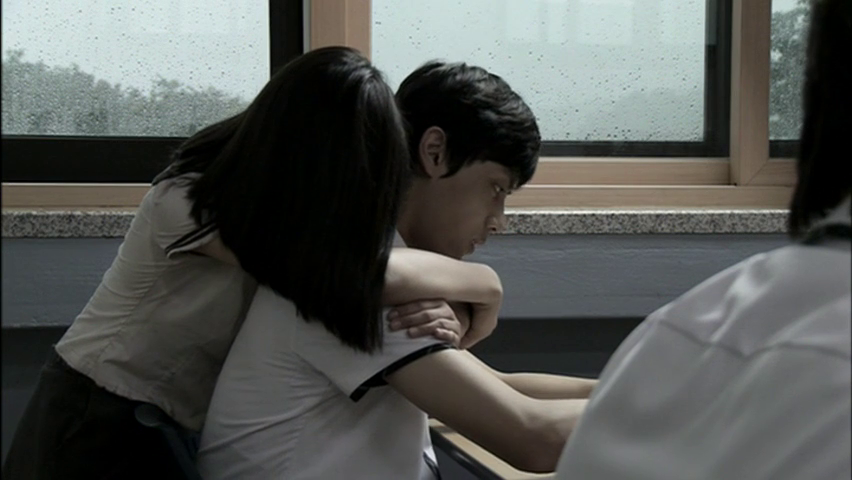
Three young ladies visit a photographer and tarot reader (Young-woon Park), whose cards presage and doom their respective fates. A schoolgirl falls to her slow death of a broken neck in a basement room of her high school's disused wing when reaching for a precariously perched kitten left in her care, and is soon forgotten by her careless classmates; hers is then the The Hand that Calls to hazed students who are tasked with exploring the facility in the expectation that they'll encounter a suicidal teacher's spirit. In Stand by Me, best friends (Kkob-bi Kim, Ji-soo Shin) and an ex-boyfriend (Jong-hyun Hong) compete for their principal's singular recommendation for early admission to Seoul University, but an unexpected pregnancy, then manslaughter redounds to their haunting. A telegnostic teenager (Tae-ri Lee) is the Haunted Boy who perceives ghosts that others can't, such as those of a preteen girl who's crushing on his handsome, unnoticing classmate, or the infamous, deceased serial killer who murdered her. For horror, this tripartite anthology is a flop; nothing here chills to a degree's decrement, despite the adequacy of screenwriters/directors Jho Gwang-soo Kim, Eun-kyung Jo, Myeong-jun Yeo, Dong-myung Hong, and their small casts. Its first two segments are dull and slightly despondent, though the third charms, amuses, and excites in its wanton illogic (how could a ghost be killed by another?). Those who won't care to sit through most of its abysmal GFX and the sight of unappealingly homely, sullen Kim might be better served by viewing Haunted Boy alone.

=]=:< <"Maybe if the ugly serial killer's ghost ghost-stabs the little girl's ghost, she'll go to hell instead of heaven."
Yeah, maybe. Sure. All I know is that Kkob-bi Kim's face pisses me off. She's cute from some angles when she's heavier, but half the time, she looks like a homely boy.
=]=:< <"Oh, so she's exactly like Gio Scotti."
No! Gio Scotti's probably a boy, and has never been heavier.
=]=:< <"Oh."
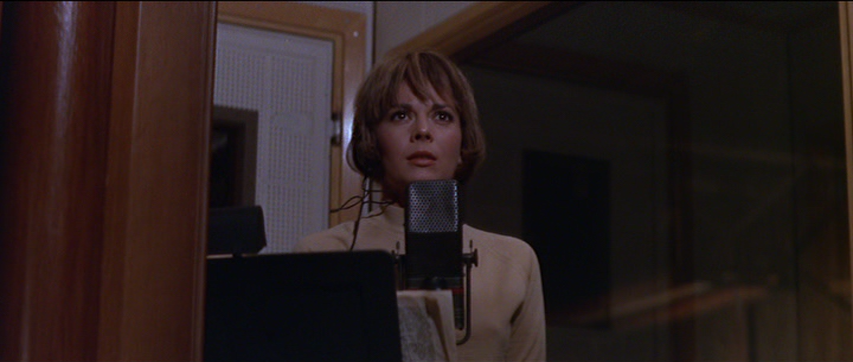
Life with her nutty single mother (Ruth Gordon) and light labor on the boardwalk where they live in squalor hardly satisfies a teenaged tomboy (Natalie Wood), whose submission of a record that exhibits her vocal talents attracts the attention of a movie mogul (Christopher Plummer), who cultivates the spunky ingenue's histrionic, choral, and terpsichorean talents to launch her to stardom within a year. Almost as soon as she's so ascended, the unseasoned adolescent buckles, then snaps under the stress of filial sacrifice, constant work, and heartbreak ensuing her marriage to a dashing yet closeted leading man (Robert Redford). Robert Mulligan's melodramatic yet potent cinematization of Gavin Lambert's self-adapted insider novel casts a refeshingly honest spotlight on the sordid practices behind interwar Hollywood's glitzy veneers, but it's a trifle too talkatively turgid for its own good. The leads are superb -- Redford and especially Plummer mesmerize in scenes where they deliver elegant monologues with sensitively nuanced theatricality, and Wood alternates between woeful naturalism and arch overplay with a striking, sometimes disquieting grace. In a dramatic climax when her starlet finally succumbs to her manifold pressures in a recording booth, or a prolonged, blackly humorous sequence involving failed suicidal attempts, her performance transcends the stylistic and thematic limitations of the film itself -- a rare feat that was unfortunately unseen by most when Mulligan's flick flopped. Were it as good as its actors for a tighter script and fewer flabby moments, it might've not.
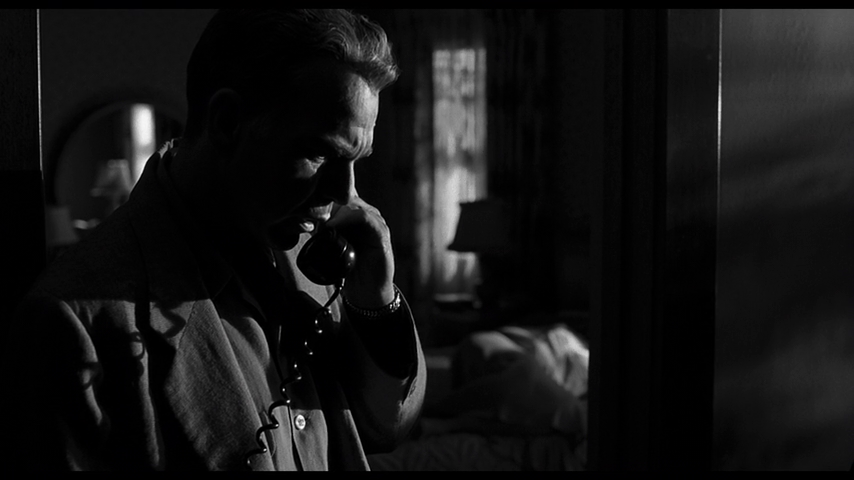
To invest $10K in an enterprise of dry cleaning proposed by a bewigged, obvious confidence man (Jon Polito), a laconic barber (Billy Bob Thornton) who's living quietly in Santa Rosa during the late '40s blackmails a department store's overbearing, coxcombical manager (James Gandolfini) with whom his perfunctorily unpleasant, alcoholic wife (Frances McDormand) is adultering, and so tips the first domino in a chain of concentric repercussions that progressively worsen his life. For all it has to recommend it, the Coens' funny, twisty noir homage to James M. Cain's crime novels and their successful adaptations could've been a very good picture: their deft direction painstakingly imitates those of crime dramas helmed by the likes of Wilder, Huston, Hitchcock, Garnett, et al.; Roger Deakins's superbly detailed grayscale photography contrasts whitewashed days with blackshadowy nights; Dennis Gassner's sets and Mary Zophres's costumes constitute verisimilitudinous postwar trappings; the entire cast is pitch-perfect, esp. Thornton in a supremely understated lead that's complemented by his restrained (but not at all monotonous) voice-over. Alas, it all goes awry during its last half-hour for tonally divergent excursus involving its tonsor's crush on the pretty, pianistic daughter (Scarlett Johansson) of a civil lawyer (Richard Jenkins), sightings of UFOs, needlessly plotted kinks, and ill-timed fellatio, which with other contrivances squander Tony Shalhoub's performance as a cunning yet parasitic defense attorney, and trickle miserably to a morbid, downbeat, pointless conclusion in maladroit mimicry of Cain's own. Technically excellent but ultimately as hollow as its protagonist's personality, this is what comes of a pastiche directed by two master craftsmen who couldn't be bothered to finish their film as cleverly as it began: a terrible waste of talent.
=]=:< <"I know you love these guys, but that string of flicks from O Brother through the Ladykillers remake really suck."
Nobody's perfect, which they're really striving to prove individually these days.
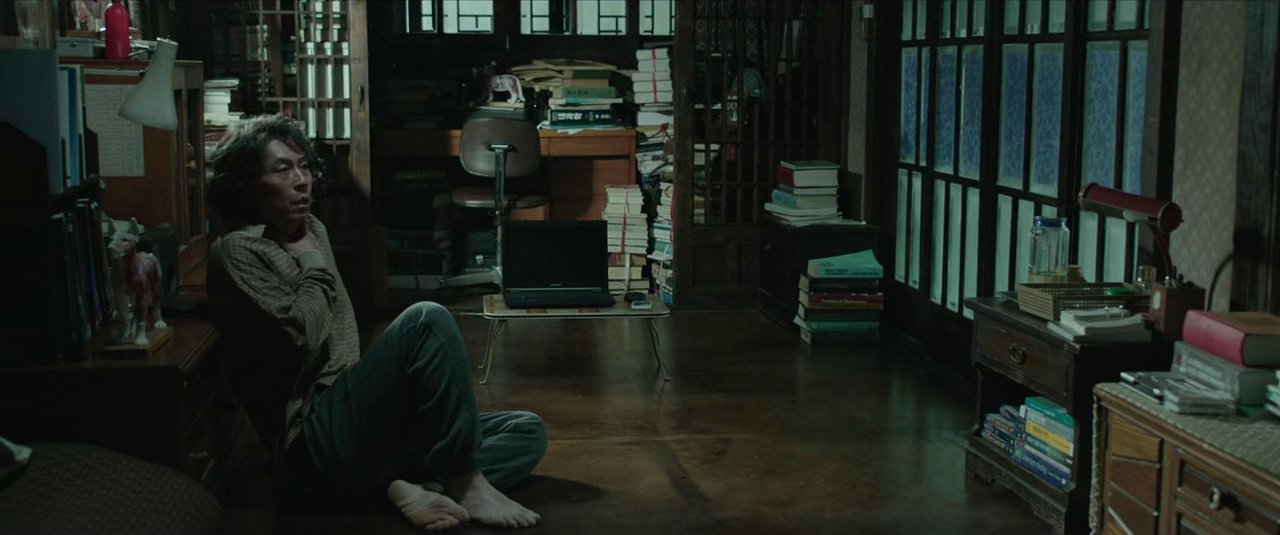
Koreans love lurid spectacles, which is why this crime drama drawn from Young-ha Kim's grisly, sinuous, bestselling novel A Murderer's Guide to Memorization topped the domestic box office in 2017. Age and Alzheimer's has all but hobbled a graying veteranarian and serial killer (Kyung-gu Sul) who has circumstantial reason to suspect that the handsome young policeman (Nam-gil Kim) who's courting his daughter (Seol-hyun Kim) indulges in the same avocation, though without his moral restraint or rationalizations. Kim's twistingly tense plotting and good personations by the principal cast bear well the excessive exposition of director Shin-yeon Won's and Jo-yoon Hwang's ham-fisted screenplay, which eschews most of this story's ambiguous potential, and reduces it to ingratiating, exhaustively explicative pulp. Were it stripped of its narration, flashbacks, and half of its dialog to be tightly, tersely, insinuatively scripted, this could've been a truly great thriller. For what it is, it's skillfully shot and cut, and fun, which is all that anyone expected.
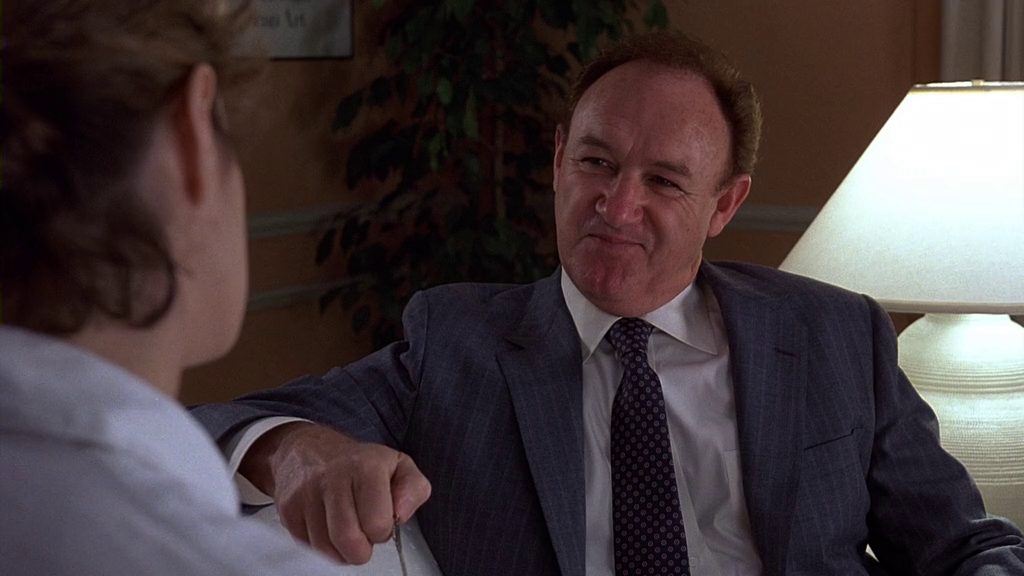
Two men occupy the affairs of a high-class prostitute (Sean Young) -- the newly-appointed Secretary of Defense (Gene Hackman), whose expensive affection for her is ultimately unrequited, and a handsome, sincerely smitten sailor (Kevin Costner) who she truly loves. When the federal executive accidentally kills her in a fit of wrath, he and his underhanded, closeted executive aide (Will Patton) launch an investigation into her death that's predicated on the imputation of her murder to a rumored Russian mole -- and headed at his behest by Costner's naval officer. Screenwriter Robert Garland transposed Kenneth Fearing's The Big Clock to Washington D.C. late in the Cold War, and the resultant fun, cunning, cheesy, big-budget thriller entertains with interrelational tensions, often unexpected twists, some great chases, and plenty of suspense, even if it crumbles into inanity during its climax. A fine, famed cast at the capable command of Australian director Roger Donaldson don't waste their respective moments: statuesque Iman is as believable a call girl as is lovably plump George Dzundza a crippled computer scientist, and Fred Thompson comfortably plays himself in the part of the CIA's Director, but Patton is the movie's surpising cynosure as Hackman's sharp, seething, scheming underling, a role gnawed satisfyingly over the top. As always, Hackman's impeccably calibrated charisma is a treat to watch, especially when his entitled bureaucrat's on the tense verge of fulmination. Costner hits his marks well and looks terrific, but his famously monotonous delivery doesn't become his role. Stanley Kubrick's preferred DP John Alcott lensed this last of his engagements for maximal texture in picturesque locations and splendidly dressed sets. Conversely, Maurice Jarre's amateurish score sounded by Yamaha DX-7 presets may be his worst. Whether or not Garland's conclusive reveal satisfies depends on whether you foresaw it.
=]=:< <"It would be hilarious if he turned out to be a Belgia--"
Shhh!
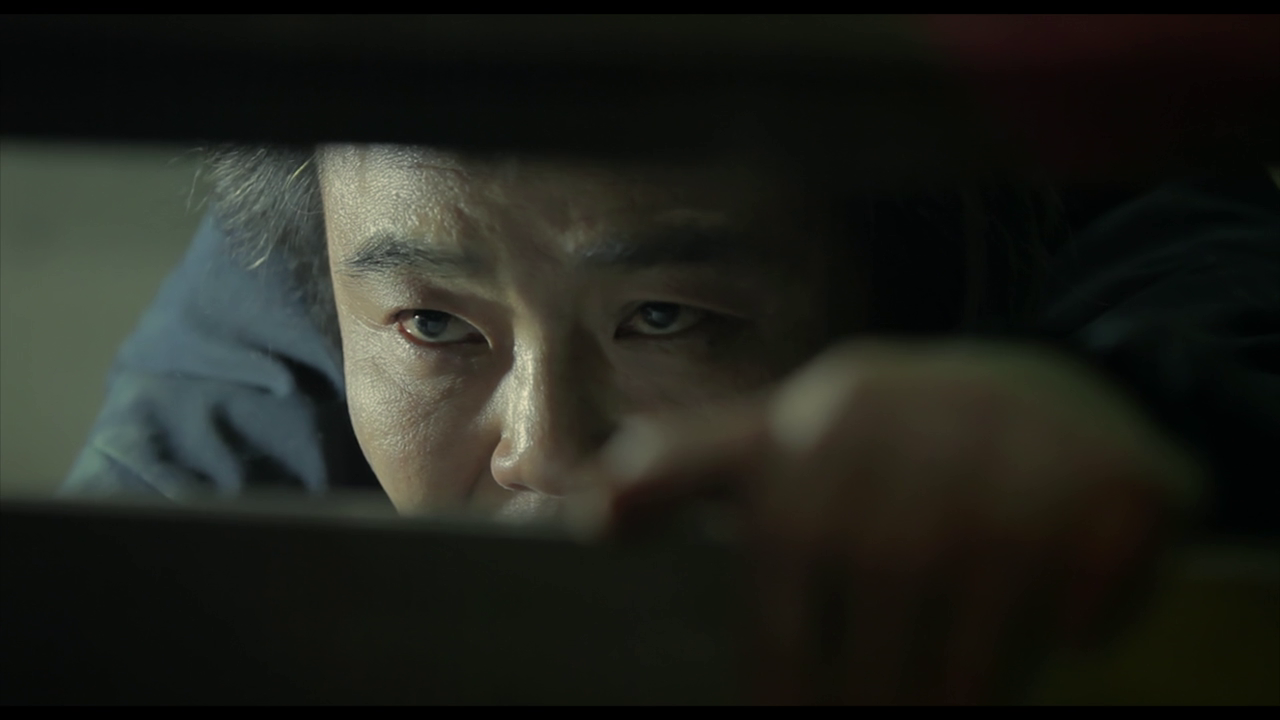
Disfigurement (for insurance payouts) is the preferred punishment inflicted by a sadistic debt collector (Jung-jin Lee) for a ring of loan sharks. When an older woman (Min-su Jo) who claims to be the mother who abandoned him insinuates herself into his life, he experiences his first true happiness and filial devotion, without realizing that and how he's revisited by the consequences of his iniquities. As in all of his pictures, Ki-duk Kim's direction and cast are first-rate, and almost compensate for his slapdash story and its edgy artificiality. In a small part, little-known histrion Mun-su Song is particularly memorable for the subtly credible indignation that he indues to one aging, aggrieved, indebted victim. Kim's fans can enjoy this despite its faults; for others, his rather clumsy representation of South Korea's organized crime will be harder to swallow.
=]=:< <"Just go to the supermarket to buy chicken. You live in a city, weirdo."
They're fresher that way.
=]=:< <"He's Trent Reznor Peter Steele fuck you mom I'll listen to my Discman in church edgier that way."
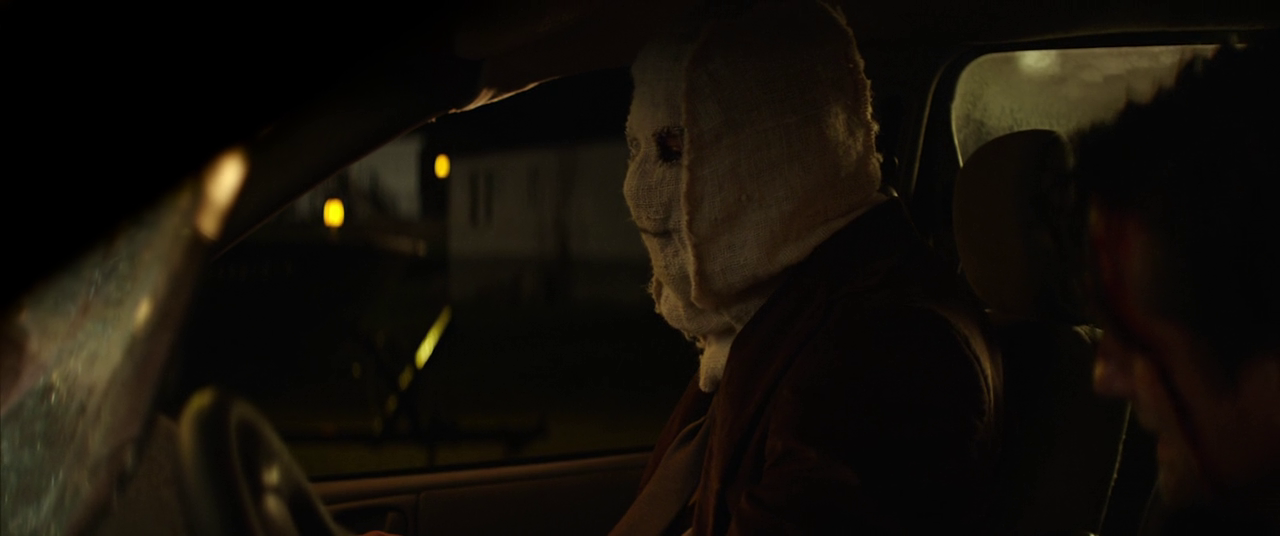
An ominously quiet mobile home park is both the vacational destination of a nuclear family (Bailee Madison, Lewis Pullman, Martin Henderson, Christina Hendricks) and the temporary hunting grounds of that slaughterous, masked trio (Damian Maffei, Emma Bellomy, Lea Enslin), who are ready to greet their last assaultees. Decadally awaited, crowd-pleasing sequel to Byan Bertino's atmospheric thriller is slickly shot, lensed, played, and cut with flair, but the fumbling idiocy of its familial victims and attendant narrative convolutions scripted by Bertino and Ben Ketai are less diverting than irritating. Director Johannes Roberts's stylistic derivations from '80s slasher fayre is emphasized by effectively recontextualized MOR hits like Kids in America, Night Moves, Making Love Out of Nothing at All, Total Eclipse of the Heart, etc. to tug on its target demographics' nostalgic heartstrings. For all its silly shortcomings, this follow-up boasts more craft and packs a harder punch than most other contemporary thrillers, and those to which it's paying homage.
=]=:< <"I guess the movie ends too soon if they just run away like normal people, huh?"
Look, you can't generate more plot points and get murdered if you use your brain to escape. Also, Martin Henderson is the dad. He was born -- maybe even genetically engineered -- to annoy us before dying horribly onscreen. He's probably contractually bound to be a dipshit and get greased torturously in most of these.
Swimming pools in the lush suburban backyards of his affluent Connecticut neighbors are the sequential loci through which an aging, affable, athletic advertising executive (Burt Lancaster) aims to serially swim on his way back from a forest to his house -- a journey that bewilders some friends and acquaintances of the fit, flirty playboy, many of whom aren't happy to see him. As those hostile of his reunions and encounters outnumber the friendly exceptions, he's forced to face his failings, pretenses, delusions, and the personal suffering that's ensued his hedonism and parental neglect. Still larger than life and more robust than no few men of half his years, quintagenarian Lancaster dove as deep as this cinematization of John Cheever's dire, classic short story goes, and while he's as great as usual in his part of the obliviously optimistic suburbanite with a reliable cast of well-tempered co-stars (Janice Rule, Janet Landgard. Tony Bickley, Michael Kearney, Bernie Hamilton, et al.), neither his nor their charismatic ardor can overcome either the indulgently sentimental flourishes or abiding, stiltedly self-conscious tone abundant in director Frank Perry's and his wife Eleanor's screenplay, both of which are commonplace in social dramas of the '60s and early '70s. Whether extensive recasting and reshoots helmed by Sydney Pollack at the behest of producer Sam Spiegel following Perry's dismission improved this condition is questionable, but the result is both too exuberant in its revelry and asides, and overly overwrought in its tragic revelations. Moreover, Marvin Hamlisch's (very first) score marries neoromantic treacle to pop arrangements, and it's at least as dated as the themes and archetypes here belabored. Blemished yet substantial, the Perrys' curiosity clumsily communicates a weighty, worthwhile message in the broadest strokes by performers who rise above its screenplay's limitations -- but not too far.
=]=:< <"Why didn't he bring his shoes? Maybe I can't relate because I don't wear or need 'em, but it seems to me that if you're expecting to walk and run long distances, you'd need those."
I think he suffered a schizoid break with reality, which doesn't excuse blackfeet at the public pool, or anywhere else.
=]=:< <"Imagine how great this would be if the pools were ponds, and alligators were in some of them, and just when you think he'll survive -- he doesn't!"
Crocodilian cinema is an idea whose time has come.
=]=:< <"No, it's decades overdue! Jews just won't make movies for us because they can't manipulate us like blacks or women or political junkies or furries."
© 2025 Robert Buchanan